The thinking

What this is built on

Learning from experience

A team that's told how to collaborate remembers a slide. A team that experiences it remembers itself. That's the idea behind learning from experience: do something first, then understand what happened. A model up front works against you. You end up looking for the model instead of what's actually happening.

During the challenge it just happens. Pressure builds, a decision has to be made, and everyone does what they always do: who takes the lead, who stays quiet, who decides when time runs out. Nobody has to fake it.

In the debrief there's a shared example on the table that everyone was part of. That makes the conversation concrete, instead of an exchange of opinions about how things usually go. The three mechanisms below are why that works, not just why it feels like it works.

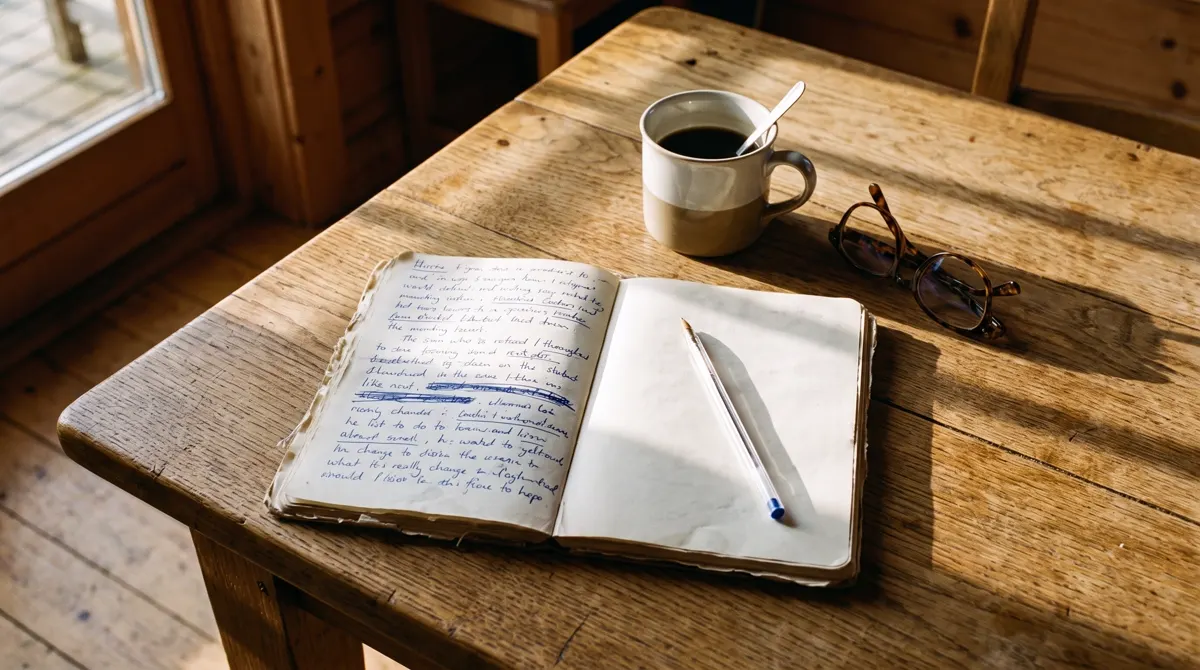
A handwritten notebook on a wooden table

Three mechanisms

Knowledge that sits in one head

What it is

A good team doesn't need to know everything. It needs to know who knows what, and be able to reach that person at the right moment. Psychologists call this transactive memory: the memory of a group, spread across the heads of its members. No one has the full picture. Together, they do.

Where it shows up in the challenge

No one on the team gets all the information. The task can only be solved once everyone's piece is on the table, just like on the work floor, where knowledge is never held by one person but spread across people who barely talk to each other.

Groups discuss what everyone already knows

What it is

In a conversation, information everyone already had comes up most often. Information only one person had tends to stay unsaid. Researchers call this the hidden profile: a group would rather confirm what's already known than actively look for what's missing, even when that's the missing piece that matters.

Where it shows up in the challenge

Along the way it keeps turning out that someone knew something they didn't mention, because it seemed unimportant or nobody asked. That's the same pattern that plays out in meetings. Now the teams see themselves doing it, live, without anyone having to point it out.

Psychological safety

What it is

A team performs better when its members feel free to ask a question, admit a mistake, or disagree, without it costing them. Research by Amy Edmondson shows that this sense of safety is the strongest predictor of a team that actually learns, stronger than intelligence or experience.

Where it shows up in the challenge

Under time pressure outdoors, it quickly becomes visible who says what they think right away and who waits first. The stakes are low: it's a game, not a performance review. That makes this exactly the moment when that behaviour can be discussed without consequences.

What we leave out

We build on three mechanisms backed by decades of research: transactive memory, the hidden profile and psychological safety. Not Belbin, Tuckman, MBTI or DISC. Those are familiar models, but we'd rather build on what repeated scientific research shows than on a personality type assigned in advance.

What we do and don't promise

One afternoon doesn't make a team permanently better. Anyone honest about what a day can do won't claim otherwise. That's why the day doesn't end with a good feeling and nothing else, but with three agreements the team writes down themselves, in their own words, about what they'll do differently. Whether those agreements stick is up to the team. What we deliver is the moment they get said out loud for the first time, with a concrete example attached instead of a good intention.